
The Crisis of Cultural Homogenization by AI : A Call to Safeguard Global Diversity
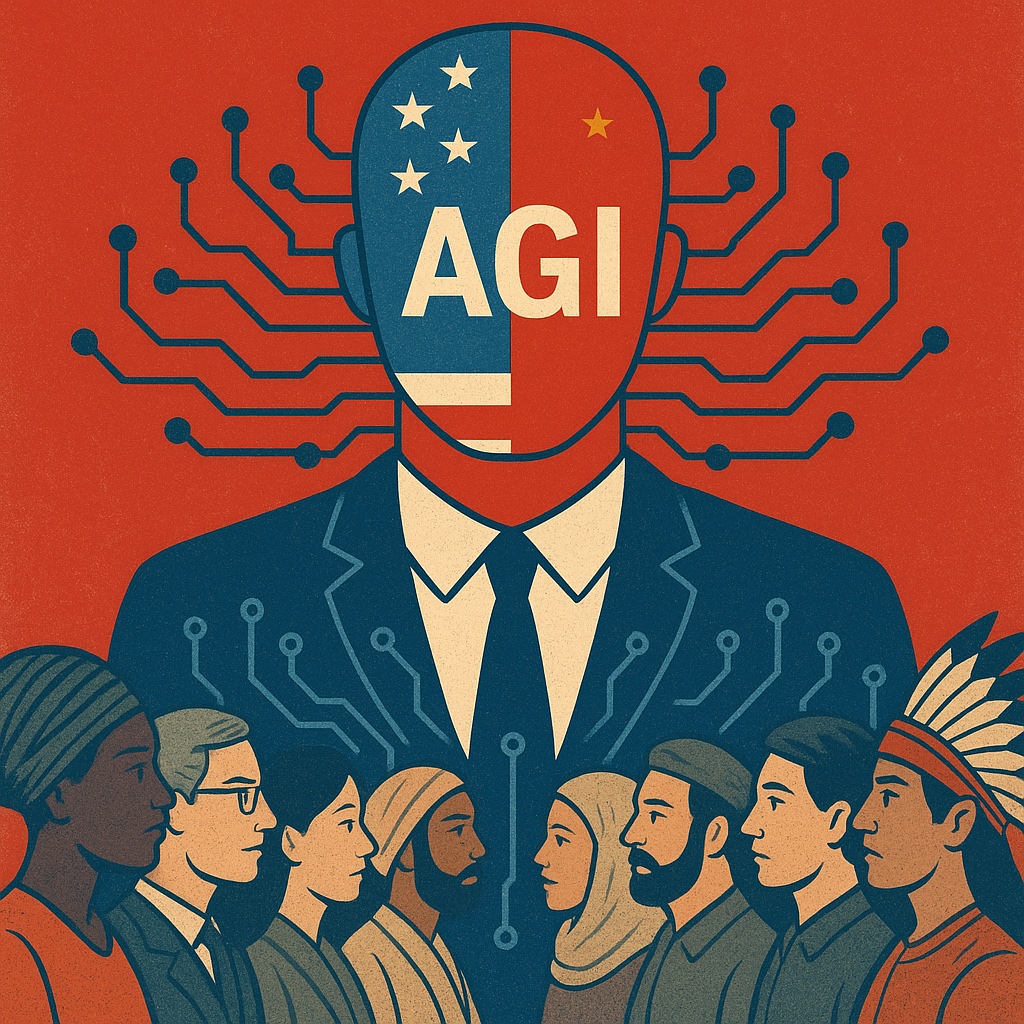
I wholeheartedly welcome the immense potential of AI, especially AGI, to profoundly enrich humanity.
However, I simultaneously sound the alarm on a critical and urgent risk: that AI developed predominantly by private U.S. corporations could become the global standard, leading to the homogenization of human thought, cognition, and fundamental values.
This is not merely an issue for Japan, but a planetary challenge impacting the future of every nation.
This homogenization risks diluting the unique sensibilities, thought patterns, and historical contexts nurtured by diverse nations and cultures worldwide, ultimately diminishing humanity's creativity and adaptability.
Cultural diversity is, like biodiversity in ecosystems, an invaluable asset for mitigating global risks to humanity, and its erosion could destabilize the planet's overall balance.
Why is Nation-Specific AI Essential for Every Country and Region?
The foundation models of AI and their learning processes are profoundly influenced by the data they consume and the philosophies behind their design.
Consider the Japanese aesthetic of "Wabi-Sabi," which brings profound peace and comfort through sensibilities that cannot be fully articulated in words—such as a single morning glory arranged in a minimalist tea room.
Each culture possesses such subtle, ineffable nuances, sensitivities, and values.
If AI is trained predominantly on data and values from a single cultural sphere, it will struggle to comprehend and generate these deep, culture-specific sensibilities.
This means AI's insights and services could only perceive the world through a limited cultural lens, risking the loss of wisdom and perspectives inherent in diverse cultures.
Proposal: For AI Evolution that Respects Cultural Diversity
Addressing this vital global challenge, I strongly advocate for the following measures:
1. Promote Open-Sourcing of Core AI Technologies and International Collaboration
• Leading AI corporations should actively open-source portions of their AI foundation models and development resources. This would accelerate the development of culturally optimized AI by researchers and developers in various nations and regions.
• Strengthen international research cooperation, enabling researchers from diverse cultural backgrounds to collaborate on developing general-purpose foundation models with reduced cultural bias.
2. Invest in and Support Nation-Specific Foundation Model Development
• Governments and digital policy officials in every nation must prioritize and strategically invest in the national development of unique AI foundation models that deeply reflect their respective cultures, languages, histories, and sensibilities. This goes beyond mere localization of existing models; it aims to utilize diverse national cultural data to enable AI to learn the ineffable "sensibilities" inherent to each culture through new approaches.
3. Incorporate Cultural Diversity Clauses into AI Ethics Guidelines
• International AI ethics guidelines should explicitly include provisions for respecting and protecting cultural diversity. This would establish norms to minimize the risk of AI unduly favoring certain cultures or marginalizing others.
I tentatively call the risk of homogenized thought driven by specific AIs "One Mind AI" and I believe we must avoid it. I advocate for AI that truly celebrates human diversity. I tentatively call this movement "Cultured AI (CAI)" and I strongly urge that AI not confine the world to a single mode of thinking, but rather unlock the wisdom and sensibilities of diverse cultures, becoming a common force to build a rich future for all humanity.
 LINE
LINE